
The Figurative Tradition in Fine Art: The Human Form on Paper
The human figure has been central to fine art throughout history, serving as a visual language for beauty, emotion, and the human condition. The portrayal of the figure has long been a subject of fascination, with artists across every era studying the form to understand light, anatomy, gesture, and presence. From classical sculpture to modern interpretation, figurative art has shaped the way we see ourselves. This piece explores the figurative tradition, its evolution, and its place in contemporary fine art — including the hand-drawn figurative work of Houston artist Andros Karr.

"The Kiss" - Erotic Masterpiece by Gustav Klimt
Defining figurative art and its historical significance
Figurative art goes beyond mere visual representation, encompassing the study of the human form, emotion, and expression through artistic mediums. Throughout history, figurative work has played a crucial role in how cultures understand beauty and the human experience. From classical drawing traditions to the gilded portraiture of Gustav Klimt, the figure has served as a mirror reflecting cultural attitudes toward the body and the self. Understanding this history gives insight into how figurative art shaped the artistic landscape — and why hand-drawn work in this tradition remains so valued today.

Figurative drawing, graphite on paper, by Houston artist Andros Karr
The power of the human form in art
The human form is a potent subject that transcends traditional boundaries, inviting viewers to connect with something deeply familiar. By rendering the figure with skill and intention, artists evoke recognition, emotion, and presence. It is through the balance of anatomy, light, and gesture that figurative art illuminates the complexities of human nature, offering a lens through which to explore the human experience. This tradition continues to captivate audiences worldwide, and it sits at the heart of Andros Karr's hand-executed graphite and charcoal work.
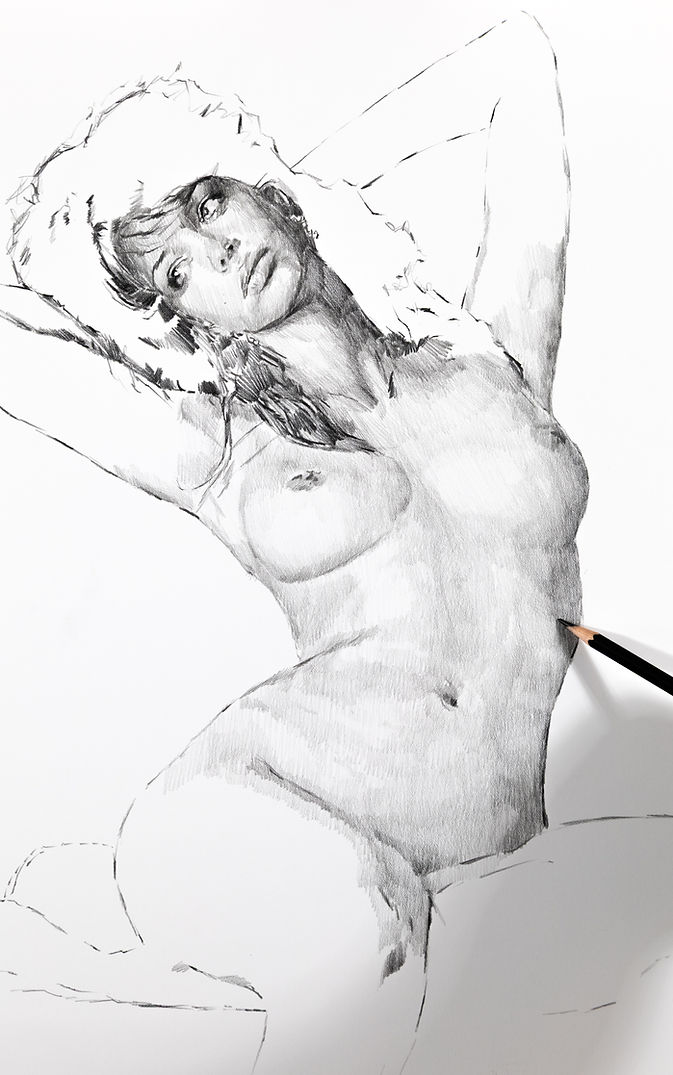
Figurative drawing, graphite on paper, by Houston artist Andros Karr
The figure in contemporary fine art
While the figurative tradition is centuries old, it remains vital in contemporary art. Today's figurative artists navigate between classical technique and modern sensibility, using the human form to explore identity, presence, and permanence. In an era saturated with digital and AI-generated images, hand-drawn figurative work carries a particular weight — it is singular, made by hand, and impossible to reproduce. This is the territory in which Andros Karr works: original, archival drawings of the human form, created entirely by hand.

Figurative drawing, graphite on paper, by Houston artist Andros Karr
The enduring value of hand-drawn work
The lasting value of figurative fine art lies in its craft and permanence. A hand-executed drawing on museum-grade paper is an original object — never a print, never AI-generated — created through the artist's direct study of form, light, and gesture. For collectors, this is the appeal: a one-of-one work in a tradition that stretches from classical drawing to the present. To explore available original works or commission a custom piece, visit androskarr.art.
